Thursday, October 9, 2014

Rabbitstick 2014

This year we attended Rabbitstick, a primitive skills gathering in Rexburg, Idaho. This is one of the oldest gatherings, and we had a fantastic time. Gelsey focused on fibers, learning backstrap loom weaving, starting a water-tight basket, and learning twining. I made ghillies (European-style moccasins), used a pole lathe, processed a duck for lunch, and made small split-willow deer. It was a camp full of friends, supporting one another in a quest to live simply, learn the ways of our ancestors, or follow some intangible call that led them to that moment. I would recommend attending one of these fine events! Rabbitstick and Winter Count are hosted by Backtracks, www.backtracks.net.
~Neal

A limber pine we passed in Utah

Our camp

The Gypsy-camper

Gypsy wagon

Two more gypsy wagons

The goats of the Winter Moon Tribe herd

A shelter in the woods

A herd of willow deer


Backstrap loom class

Our friend and co-conspirator Gone Feral's popular pack basket class

Duck ready for processing

Porcupine track by the river

Two skin on frame kayaks

Morning circle

Ghillies class

Completed ghillies, and a pair to be made

Pole lathe

Mick at his gypsy wagon

Working the pole lathe

The bowl taking shape

Twined basket


Completed twined basket, as an awl case

Crafts and skills learned and finished over the week

Overnight Camps

I love overnight camps. These are the moments over the course of the summer where we go deep with youth and teens. Over the camp we hit skills hard, living, breathing and working together as a small clan. This summer was particularly great, focused around the fire, but also covering fiber arts, and sleeping outside. At these camps, anything is possible, adventures appear, and a bond is created in the camp that lends itself to all participants having transformative experiences.
~Neal

Billy can cooking

Eating utensils

Starting a cattail basket

Working on bowdrill

Two burn bowls

Gourd canteen, burn bowl, carved spoon

Cattail basket in progress

Bowdrill

Three peas in a duff-bed pod

Cattail basket


Scouting

Throughout the year, we work on "Scouting", the art of invisibility, awareness, stealth and observation. In our world of routine, scouting adds intensity, breaks us out of our comfort zone, and unleashes our inner predator (and prey, when being scouted). Covering ourselves in mud, ignoring the annoyance of mosquitoes, and open our awareness while narrowing our focus is magic.
~Neal

How many people do you see?

Lion in the grass

Some spots take some preparation...

Setting up...

Covering....

Covering...

Covering...

Covered!

Sometimes a simple "blind spot" is enough


Earth camoflage


Play

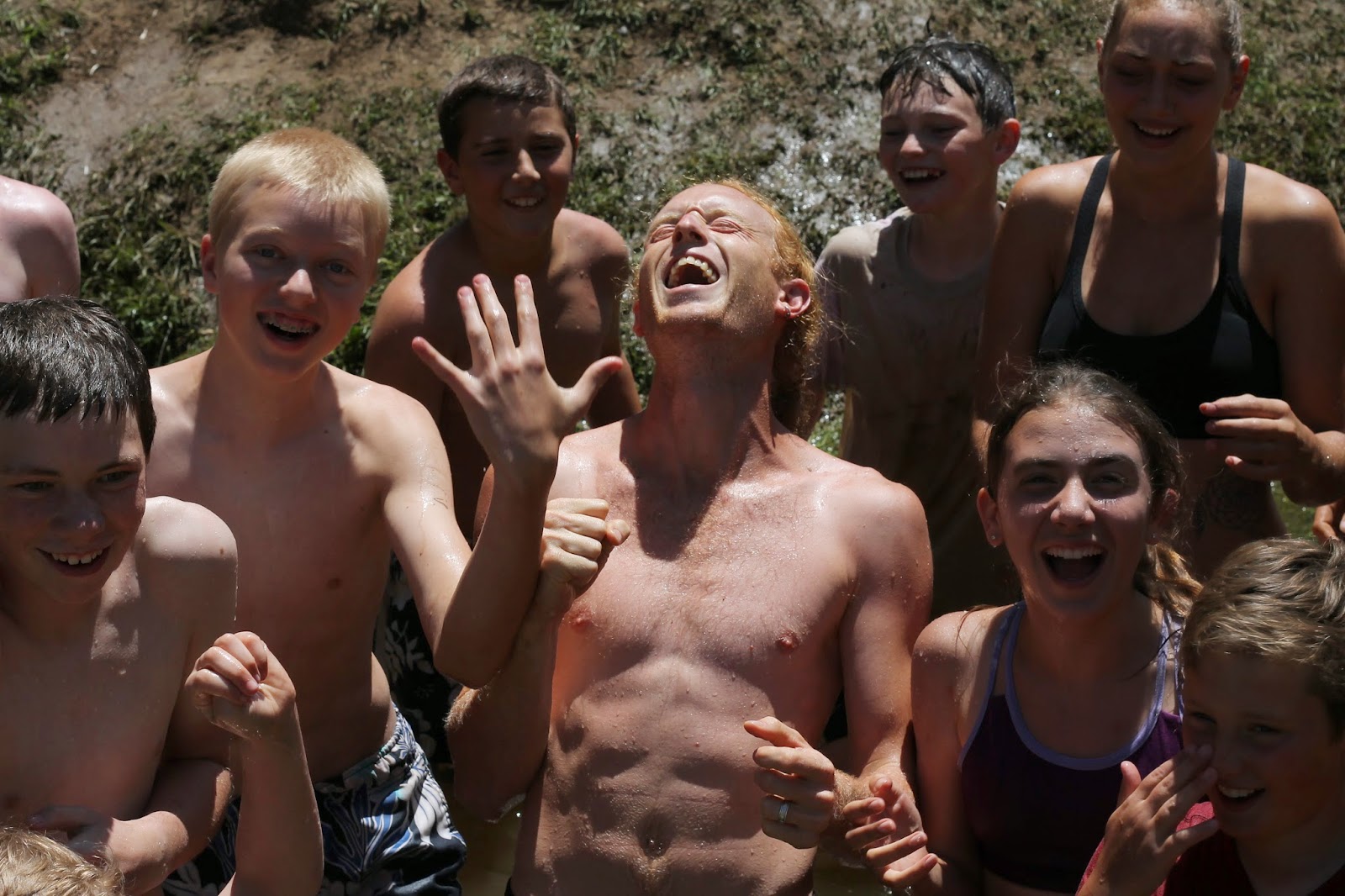
At Laughing Coyote, our goal is to play, to follow the path of the Otter, finding our connection to each other, the Earth, and raw joy through the unbridled, full-on energy of Play. Looks like fun?


Saturday, May 10, 2014

Spoon Carving

At Laughing Coyote, many of the instructors have a bit of an obsession with spoon carving. Scraps of wood are pocketed away, carved in spare moments. Students frequently come upon us carving, and now realize it is inevitably a spoon. What is it about spoons that is so satisfying? For one, it is interesting to work with many different woods, to explore the patterns of the grain. A spoon is highly functional, yet leaves a great deal of room for creative expression. Over the past few months, I have seen spoons carved of black walnut (heartwood and sapwood), plum, aspen, willow, Russian olive, Rocky Mountain juniper, and elm. Sometimes they are sanded to a high polish, but my favorites are ones skillfully carved, with the knife marks still visible.
~Neal


A collection of spoons

The stages of a spoon

Left to right: black walnut heartwood, aspen, black walnut sapwood

Grain of black walnut spoon

Handle detail

Black walnut sapwood and Rocky Mountain juniper spoons